
Relearning craft in real time

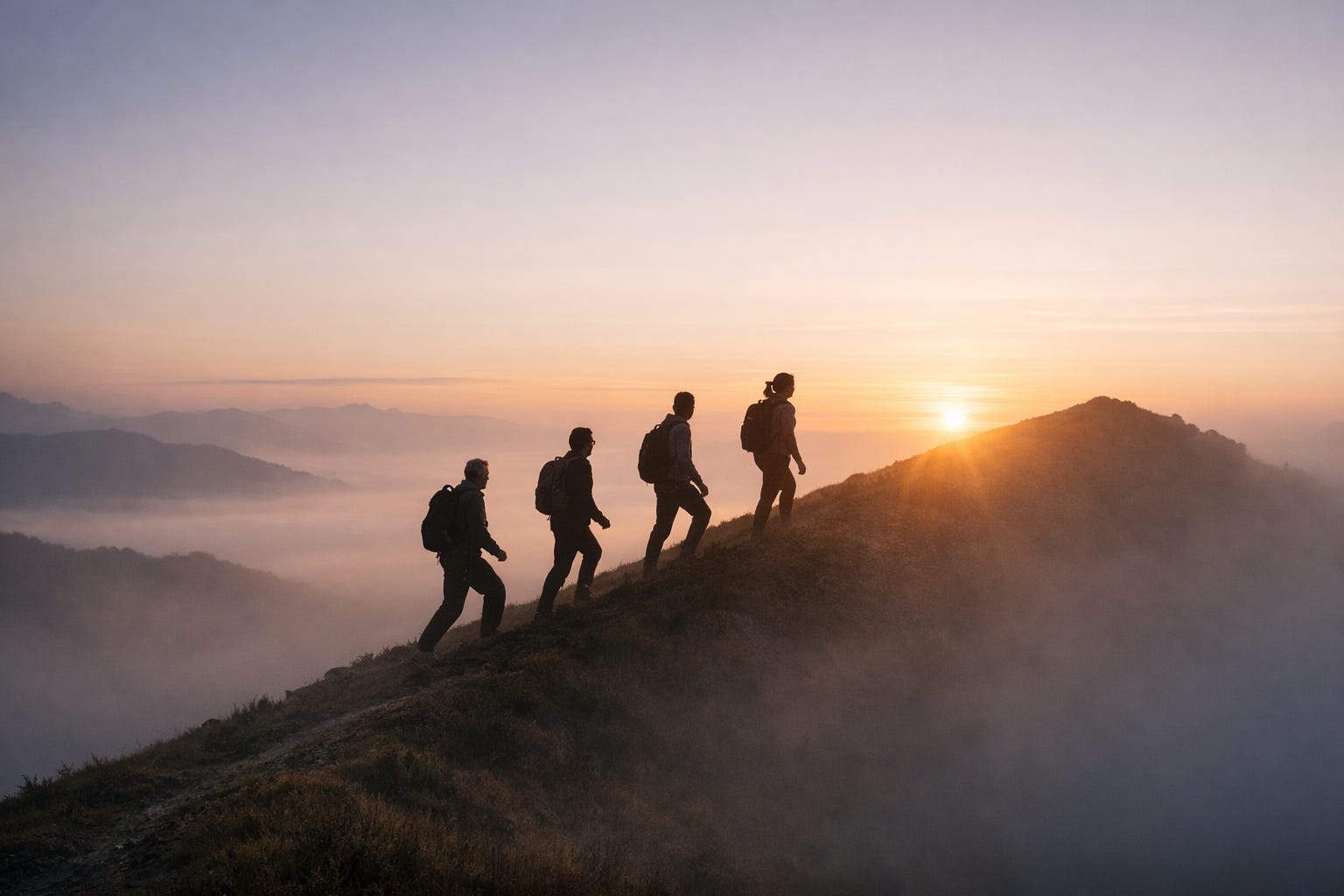
The ground is moving
Lately, it feels like the definition of craft is shifting in real time.
A lot of this is driven by how quickly the latest AI models have improved. These tools can now generate real chunks of production-quality software.
From the outside, the work still looks familiar, but the internal texture is changing.
Every generation of builders goes through shifts like this. Tools evolve. Abstractions rise. What used to feel like craft becomes table stakes. But this time, the intervals are shorter. The ground hasn’t fully settled before it moves again.
So the challenge isn’t learning new tools. It’s recalibrating your instincts while the definition of quality is still in motion.
You end up operating in the gap between faster tools and slower mental models.
I’ve had moments recently where I’ll finish something and realize the feeling is slightly different than it used to be - the job is done, but the internal markers I used to rely on feel less stable, and I feel less in control.
That tension is easy to miss if you’re only looking at output. But it’s very noticeable if you care about the craft itself.
When craft feels personal
For most people who care deeply about their work, craft quietly becomes part of how you see yourself.
You build a feel for what holds up. You take pride in certain details. Over time, you develop a quiet confidence in your judgment, not because someone hands it to you, but because you’ve lived inside the work long enough to recognize what endures.
And when the landscape starts shifting quickly, that confidence doesn’t disappear, but it does get harder to orient around. There’s real excitement in seeing what becomes possible. There’s also a quieter feeling of uneasiness.
And that ambiguity is hard to talk about directly. In a lot of technical environments, we’re more comfortable discussing tools and outputs than identity or pride. But underneath many of these transitions, there’s a more human question sitting quietly in the background:
If the shape of the work is fundamentally changing, what does it mean to be good at it now?
Keeping pace
One thing that makes this moment feel different is that it isn’t happening to a small group of early adopters. It’s happening to everyone at roughly the same time.
In most shifts, there’s a gradient. A few people experiment early, and the rest of the field catches up slowly. This one feels different. The learning curves are steep, uneven, and unfolding in parallel.
And that creates a strange kind of social tension.
I see it in small ways. People with decades of experience wondering if the instincts they’ve built are suddenly less relevant. Others earlier in their careers trying to decide whether to double down on fundamentals or lean fully into the new tools. No one is being irrational, the landscape is just shifting for everyone at once.
When everyone is moving at different speeds without a shared direction, comparison fills the gaps.
This is also where the question stops being only personal.
Not everyone should have to live at the frontier to benefit from progress. In healthy systems, the burden of navigating step changes can’t sit entirely on individuals. It has to be carried collectively.
Part of an organization’s responsibility in moments like this is to make sure people can move forward simply by being inside the system. It builds trust - the sense that if you stay curious and engaged, you won’t quietly fall behind because you didn’t spend nights and weekends chasing every new development.
In practice, that might mean creating real space in quarterly plans for experimentation, piloting new workflows with anchor teams before scaling them broadly, and saying out loud that no one has it fully figured out yet.
When that works, the energy shifts. People can stay open to change without feeling like they’re in a constant race just to remain relevant. Progress feels shared instead of isolating.
Over time, that shared belief shapes a place in quiet ways. In who stays. In how people show up. In the subtle gravity a place develops.
Letting it settle
The shape of the work is still moving. The language around it is still catching up. Periods like this rarely come with clean transitions.
I don’t have a clean answer for what the new steady state looks like yet.
Craft has always evolved alongside the tools that shape it. What feels different now is how visible that evolution is while it’s happening. We’re watching definitions shift in real time, without the comfort of hindsight.
Lately, I’ve found myself thinking less about trying to pin down a fixed definition of strong work, and more about how we move through the transition itself. Whether we can stay curious without becoming untethered. Whether we can hold standards without clinging too tightly to old shapes. Whether we can keep learning without turning it into a race.
Because if craft is being renegotiated, it probably isn’t something any one person resolves alone.
It settles collectively, through shared practice, over time.